The Vanishing Listening Post: Britain’s Shrinking Map of Influence

Photo: tsushima, CC BY 3.0, via Wikimedia Commons
A consulate closes quietly. There is rarely a ceremony, seldom a front-page story. A brass plate comes down from a doorway in a port city, a phone number is redirected to a capital several hundred miles away, and a handful of local staff — the ones who knew which shipping agent to ring, which lawyer to trust, which ministry official actually answered his telephone — are thanked and released.
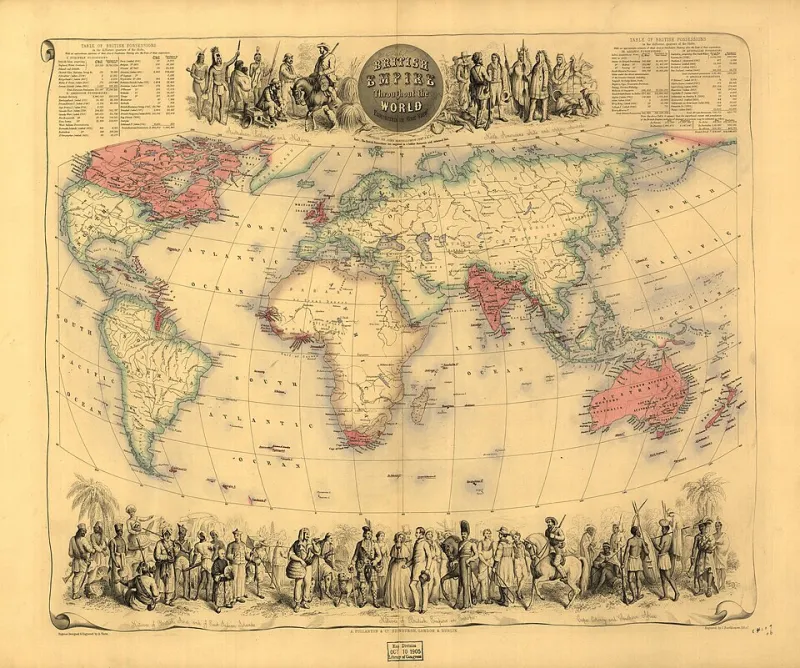
Multiply that scene across a generation and you have the shape of post-imperial British diplomacy: a network still impressively wide on the map, but thinner at its edges than at any time in living memory. The integrated reviews of the 2020s promised new posts in the Indo-Pacific and the Gulf. They said much less about the small missions that disappeared from Europe, Africa and Latin America, or about the slow erosion of the locally engaged expertise on which those missions depended.
A network built for a different century
The consular tradition Britain inherited was an instrument of trade and shipping. Consuls watched over merchants, seafarers and the British communities that grew up along the trade routes. The modern Foreign, Commonwealth and Development Office is a very different machine, but it still works through the same basic idea: presence, in a particular place, by people who know it.
What has changed is the economics. Security costs have risen sharply since the attacks on British missions in the 2000s. Property, maintenance, locally engaged pay and diplomatic security all consume budget lines that compete directly with programme spending and with the department’s newer priorities. Rationalisation follows: regional hubs, roving ambassadors, accreditation from a neighbouring capital, and a head office in London that handles more of the routine work at a distance.
What a consulate actually does
It is tempting to treat these closures as administrative tidying. Consular work is, after all, the least glamorous part of diplomacy: lost passports, arrests abroad, deaths, hospitalisations, the welfare of British nationals caught in a disaster. Most of that traffic can indeed be handled remotely, and increasingly is — through a contact centre, an online portal and a fee schedule.
But a post does something that a helpline cannot. It cultivates the local knowledge that turns a crisis from a catastrophe into a manageable problem: which clinic takes foreign patients, which police commander can be reached at two in the morning, which regional governor is trustworthy. It is also, in ordinary times, the place where British commercial, cultural and political interests are quietly knitted together by a small team who have been in the country long enough to be useful.
The hub-and-spoke bet
The case for consolidation is not frivolous. Diplomacy has to be paid for, and a state with finite resources must choose between depth in a few capitals and presence in many. Hubs can concentrate expertise, reduce overheads and give senior ambassadors a wider brief. Digital services genuinely do serve most British nationals adequately.
The bet, though, is that presence can be simulated. That bet pays off until it does not. When a coup, a flood or a hostage crisis arrives, the value of a listening post becomes suddenly, embarrassingly obvious — and by then the lease has been surrendered and the staff have moved on.
There is a second, subtler cost. Locally engaged staff are the institutional memory of British diplomacy abroad. Cut their numbers and the department does not simply save money; it loses the network of relationships that took decades to build and would take decades to rebuild. That is a form of capital that never appears on a balance sheet until it is gone.
Listening as strategy
Britain has long derived influence less from raw power than from being well informed and widely connected: the country that knows the region, that has a diplomat who speaks the language, that can convene a quiet conversation because it has been present for thirty years. That is the machinery of good offices, of mediation, of the discreet facilitation that British ministers are fond of describing as a national talent.
Mediation, however, is not conjured from a foreign ministry’s communications team. It depends on being trusted by parties who have had dealings with you before, and on knowing which of a dozen factions is worth talking to this month. Both are products of sustained presence. A state that brokers peace while shrinking its listening posts is asking its diplomats to work from second-hand knowledge at exactly the moment when first-hand knowledge matters most.
The test ahead
None of this argues for nostalgia, still less for a return to a network designed for steamships and empire. The honest question for 2026 is narrower and harder: does Britain intend its diplomatic footprint to reflect its stated ambitions, or its spending envelope?
If the answer is the former, the trade-off must be made openly — fewer grand embassy buildings, perhaps, and more modest posts in awkward places; more money for languages and for local staff; a clear-eyed assessment of which regions matter for peace and security rather than which capitals are pleasant to serve in. If the answer is the latter, ministers should say so, and stop invoking Britain’s convening power as though it were free.
A country that wishes to be heard has to keep listening. The consulates coming down from their doorways are not merely buildings. They are the ears of a strategy that has not yet been replaced.