Good Offices, Quiet Deeds: Can Britain Reanimate Commonwealth Mediation?
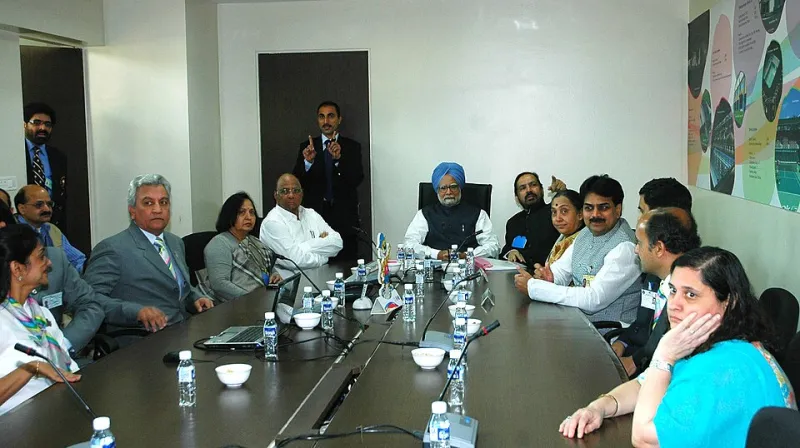
Photo: Prime Minister's Office, GODL-India, via Wikimedia Commons
The Commonwealth is often described in Britain as a family of nations, a phrase that manages to be both warm and evasive. It suggests shared history without confronting its hierarchies, and cooperation without specifying its purpose. Yet beneath the summits and the sporting fixtures lies a modest, underfunded and surprisingly effective machine for quiet diplomacy. The Commonwealth Secretariat’s good offices, election observation missions and mediation efforts have, over the decades, helped to lower the temperature in disputes that rarely commanded global headlines. In 2026, with great-power competition intensifying and aid budgets under strain, the question is whether Britain will treat this network as a serious peacebuilding asset or allow it to fade into ceremonial irrelevance.
A Network Built for Another Age
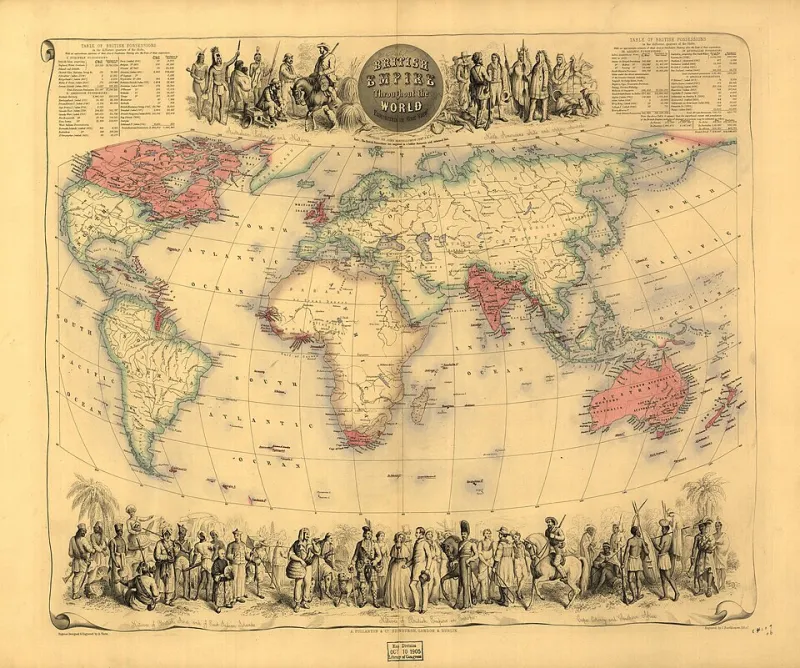
The Commonwealth’s political work grew out of the decolonisation era. Newly independent states wanted a forum that was not bound to Cold War blocs, and Britain wanted a way to maintain relationships after empire. The result was an institution with unusual reach and limited power. It could convene, persuade and observe, but it could not enforce. Its authority depended on trust, discretion and the willingness of member states to accept help without feeling colonised again.
That inheritance shapes the Commonwealth’s approach today. Its good offices are not judicial proceedings. They are patient, confidential processes in which a senior envoy—often the Secretary-General or a designated mediator—works behind the scenes to encourage dialogue, clarify grievances and propose confidence-building measures. Election observation is similarly low-key: Commonwealth Observer Groups assess polls, issue recommendations and sometimes help to legitimise a contested result. These are not dramatic interventions. They are the political equivalent of preventive maintenance.
Quiet Machinery in Action
The record is patchy but instructive. In Lesotho, Commonwealth mediation helped to ease political crises in the 2010s, bringing parties together when regional bodies and domestic institutions were deadlocked. In the Maldives, good offices were used during periods of political tension, offering a channel that was less confrontational than public condemnation. In several smaller states, Commonwealth election observers have provided a measure of reassurance to voters and opposition parties alike. The Commonwealth has also played a role in behind-the-scenes facilitation in the Caribbean and the Pacific, where its networks of lawyers, civil servants and former leaders can be mobilised quickly.
None of this makes the Commonwealth a heavyweight mediator. It cannot impose settlements, and it lacks the resources of the United Nations or the European Union. But it has two advantages. First, it is often seen as less threatening than a great power. Second, it can act through personal relationships that predate a crisis. In small states, where everyone knows everyone, that matters. A Commonwealth envoy may be able to pick up the phone to a president, an opposition leader and a church group in a way that a distant international organisation cannot.
The British Absence
Britain’s relationship with this machinery is curiously detached. The UK is a leading member and a major funder, but it has rarely made Commonwealth mediation a central plank of its foreign policy. The Foreign, Commonwealth and Development Office supports the Secretariat’s work, and British diplomats sometimes use Commonwealth channels informally. Yet the political energy that might turn good offices into a deliberate British asset is often absent. The Commonwealth is treated as a useful network for trade, culture and soft power, but not as a peacebuilding instrument in its own right.
There are reasons for this neglect. The Commonwealth is not a military alliance, and its consensus-based style can be slow. Its members include states with very different political systems, and some governments are wary of any external mediation. Britain’s foreign policy attention has shifted towards the Indo-Pacific, Ukraine and transatlantic relations. Aid budgets have been squeezed, and the Commonwealth Secretariat has faced its own funding pressures. In that climate, quiet diplomacy is easily overlooked because it produces no ribbon-cutting moments.
Why It Still Matters in 2026
The neglect is short-sighted. The 2026 international environment is one in which preventive diplomacy is becoming more valuable, not less. Great-power rivalry makes formal peace processes harder to convene. Shrinking aid budgets make expensive state-building missions less attractive. Small and medium-sized states are looking for partners who can help them manage disputes without turning them into arenas for geopolitical competition. The Commonwealth’s low-profile style fits that demand.
It also fits Britain’s self-image. The UK presents itself as a peacekeeping nation, but peacekeeping is not only about soldiers. It is also about mediation, election support and the unglamorous work of keeping dialogue alive. The Commonwealth offers a ready-made network for that work, with shared legal traditions, common administrative practices and a reservoir of retired officials and judges who can be deployed at short notice. Britain could do more to use it.
Rebuilding the Quiet Machine
A more deliberate British role would not require a large budget. It would require political attention. The UK could second senior diplomats to the Commonwealth Secretariat’s good offices team, fund a standing roster of mediators and constitutional experts, and support election observation missions more consistently. It could also use its diplomatic network to encourage member states to accept Commonwealth facilitation before a crisis escalates.
There is a risk of overreach. The Commonwealth must not be seen as a British instrument, or its quiet authority will evaporate. The UK should therefore work through the Secretariat, respect its independence and avoid lecturing. The aim should be to strengthen a multilateral asset, not to reclaim a post-imperial one.
In an age of loud diplomacy, the Commonwealth’s quiet machine is easy to ignore. But peace is often built in the spaces between summits, in phone calls and closed rooms and patient explanations. Britain has a history with that machine. In 2026, it should decide whether it wants to keep it running.