Sanctuary by Form: Britain's Visa Machinery and the Rescue of Threatened Civil Society
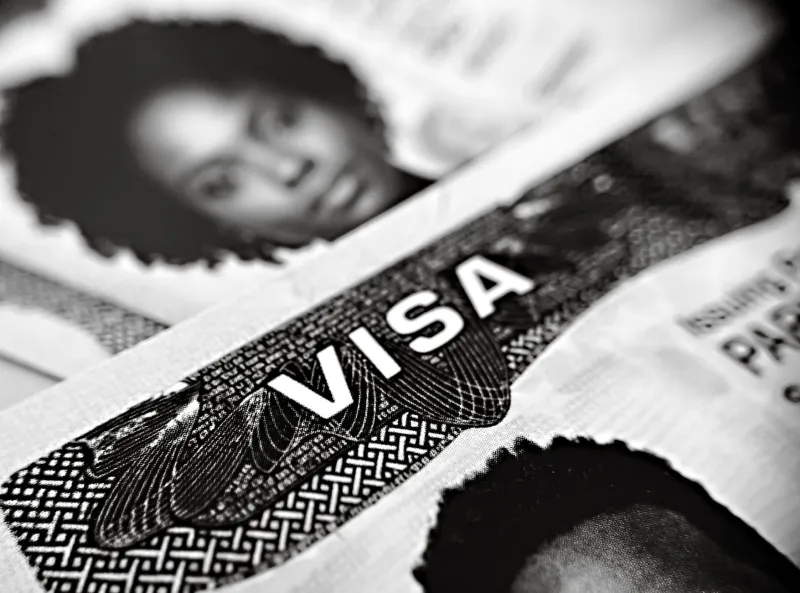
The passport is seldom imagined as an instrument of peace. It is a document of control, a queue, a fee, a photograph taken under unflattering light. Yet when a Kabul legal aid lawyer, a Manila investigative reporter or a Sarajevo ceasefire monitor receives permission to enter the United Kingdom, a decision has been taken that bears directly on conflicts Britain claims to care about. The machinery that produces it is obscure, slow and largely unpublicised. It is also, quietly, one of the more effective levers of British foreign policy available to ministers who cannot send troops and will not send money.
A Route by Any Other Name
Britain does not operate a single, celebrated sanctuary scheme for civil society. It operates a patchwork. There are work routes, study routes, temporary routes, and a shifting set of concessions and bespoke arrangements for people whose presence in their own country has become untenable because of what they do rather than who they are. Academics at risk have long been supported through partnerships between universities and the Council for At-Risk Academics, an organisation whose origins lie in the rescue of scholars displaced in the 1930s. Writers, journalists and human rights defenders have been assisted through a mixture of fellowship schemes, sponsored placements and discretionary casework, often lubricated by the quiet advocacy of the Foreign, Commonwealth and Development Office.
The result is a system that functions better in practice than in principle. Where a sponsor, a lawyer and a sympathetic official coincide, remarkable things happen. Where any one of the three is missing, the applicant encounters a rules-based apparatus with little appetite for urgency. Nothing in the published guidance announces itself as a peacebuilding instrument; much of the effect is achieved through the intelligent use of provisions designed for other purposes.
The Rules as They Stand in 2026
The practical obstacles are familiar to anyone who has dealt with the Home Office. Application fees, the immigration health surcharge, biometric enrolment, documentary requirements that presume a functioning bureaucracy in the country of origin, and a sponsor willing to vouch for an individual they may never have met. For a defender who has been detained, whose passport has been confiscated, or whose employer has been raided, each of these is not an inconvenience but a potential catastrophe.
Timelines matter as much as criteria. A route that takes nine months to decide is of limited use to someone whose name has appeared on a death list this month. Caseworking delays, requests for further information and the absence of any meaningful priority mechanism for urgent protection cases have been recurrent complaints from practitioners. Judicial review remains the backstop, and it is an expensive, slow one. The system rarely refuses outright; more often it simply fails to conclude.
Precedent: From the Kindertransport to the BN(O) Route
Britain's record in this field is neither the story of unbroken generosity nor of settled inhospitality. The Kindertransport of 1938 and 1939 brought some ten thousand children from Nazi-controlled territory. The expulsion of Ugandan Asians in 1972 produced a resettlement effort of unusual scale and, in retrospect, unusual success. Vietnamese refugees were resettled from the late 1970s; Kosovan evacuees were housed temporarily in 1999; the Vulnerable Persons Resettlement Scheme brought Syrians from 2015; the Ukraine schemes of 2022 demonstrated that, when political will exists, the administrative machine can move at speed.
The British National (Overseas) route opened in 2021 is the largest such programme in recent memory and is instructive precisely because it is rules-based, generously defined and publicly defended. It shows that the machinery is capable of operating at volume when the political case is made. The lesson is not that Britain is uniquely virtuous, but that the constraint is usually political rather than administrative.
The Arithmetic of Hospitality
Critics on one side argue that any protected route acts as a pull factor; critics on the other note that the numbers involved are tiny in comparison with the asylum system and that the deterrent claim is weakly evidenced. Both positions are held with more confidence than the data warrants. What is clear is that these routes have become hostages to the wider immigration argument. A scheme designed to protect a few hundred people at risk can be stalled indefinitely by a debate about small boats in the Channel.
There is a strategic cost to that entanglement. A mediator who cannot be extracted is a mediator who cannot mediate. A witness who cannot be relocated cannot testify. A journalist who cannot be moved stops publishing, and the silence that follows is rarely confined to one country. Britain's claim to support a rules-based international order rests, in part, on whether it can find room for the people who uphold that order at personal cost.
Discretion as Power
Visa decisions are made in the name of administration, but they are read as diplomacy. A refusal is a signal, and not only to the applicant. Governments that monitor how Britain treats their exiled critics draw conclusions about how seriously London takes its own rhetoric. Consular officials know this. It is one reason why so much of the work happens in the margins: a fellowship arranged, a university persuaded, a sponsor found, a case flagged quietly to a Ministerial colleague.
This discretion has virtues. It permits flexibility and avoids the public listing of individuals whose safety depends on obscurity. It has vices too. Unpublished criteria are unpredictable criteria, and a system that depends on who happens to be in the room is one that will protect the well-connected and overlook the isolated.
What Credible Hospitality Would Require
The case for reform is not primarily a case for larger numbers. It is a case for predictability. A statutory protection route with published criteria, capped but guaranteed, would remove the need for ministers to improvise under pressure. Fee waivers for protection cases, a defined urgency procedure with a decision deadline measured in weeks rather than months, and permission to stay that does not require the recipient to prove an intention to return home would each make a material difference. Parliamentary scrutiny, through the Foreign Affairs Committee and the Home Affairs Committee jointly, would give the subject a constituency it currently lacks.
None of this would settle the immigration argument. It would, however, separate two questions that are currently conflated: how Britain controls its borders, and whether Britain intends to stand by the people whose work makes peace possible at all.
The Quiet Ledger
Peacekeeping is usually discussed in terms of helmets, mandates and rotations. Yet the British contribution to civilian peacebuilding is often made in the form of a decision notice on Home Office letterhead, sent to someone who has been waiting eleven months and has stopped expecting a reply. That is an unglamorous kind of power, and a fragile one. It is also, on the evidence of the past century, the kind Britain has most often been able to exercise without cost to itself.
The passport of peace, if there is such a thing, is not a document issued at a ceremony. It is an accumulation of small administrative mercies, granted with discretion and withheld for reasons never stated. Whether that constitutes a credible foreign policy is not a question of sentiment. It is a question of whether the machinery can be made to work fast enough to matter.