The Municipal Mandate: Councils, Conscience and the Limits of Local Foreign Policy
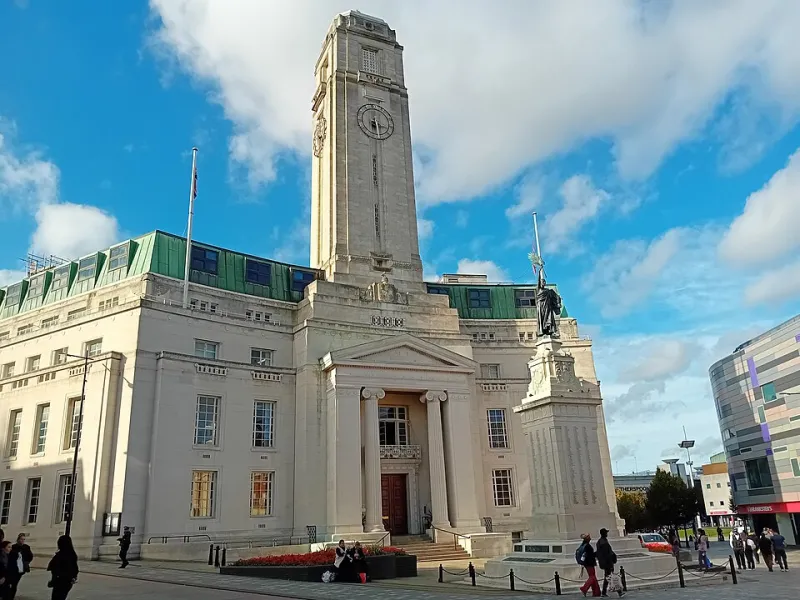
Photo: Richard Kelly, CC BY-SA 4.0, via Wikimedia Commons
British foreign policy is no longer made only in Whitehall. In 2026, councils across the United Kingdom pass motions on conflict and arms, adopt sanctuary policies, divest pension funds, rewrite procurement rules and maintain town-twinning links that carry quietly political meanings. The result is a patchwork form of municipal diplomacy: sometimes practical, sometimes symbolic, and always contentious. The question is not whether councils should care about the world beyond their boundaries. They plainly do, and their residents do too. The question is whether town hall diplomacy is a meaningful democratic check on national strategy or a gesture politics that confuses local mandates with matters of state.
From Twinning to Divestment
Town twinning is the oldest and least controversial expression of council internationalism. Born in the aftermath of the Second World War, twinning was presented as a civic peace project: ordinary towns and cities building ties across frontiers so that former enemies might become neighbours. That tradition survives, but the vocabulary has expanded. Sanctuary policies, ethical procurement, pension divestment and symbolic peace motions now sit alongside exchanges and civic visits.
These are not all of a kind. A motion expressing solidarity costs little and binds no one. A pension decision can move capital. A procurement rule can exclude firms from public contracts. A sanctuary policy can shape how local services treat migrants and refugees. Some council actions are declaratory; others are operational. The distinction matters, because critics often treat all municipal foreign policy as empty theatre while supporters sometimes overstate what a council can actually deliver.
Local authorities have no legal competence to recognise states, impose sanctions or conduct treaty negotiations. Foreign affairs remain reserved to the Crown and to ministers accountable to Parliament. Yet councils make decisions with external consequences. Pension funds are invested globally. Procurement reaches into international supply chains. Local welcome schemes affect how national immigration policy is experienced on the ground. The municipal and the international are therefore entangled, even if they are not equivalent.
A Democratic Check or a Parallel Diplomacy?
The strongest case for council-level diplomacy is democratic. International affairs can feel remote and technocratic. When councils debate divestment, twinning or sanctuary, they bring foreign policy into a forum that residents can attend, question and contest. At their best, such debates signal public concern to Westminster, strengthen transparency and give expression to pluralism in a country that is often uncomfortable talking about its place in the world.
There is also a practical argument. Councils can be peacemakers in modest ways: supporting humanitarian collections, fostering civic links in divided communities, using procurement to encourage responsible behaviour, or working with partners abroad on shared problems such as climate adaptation. These are not substitutes for diplomacy, but they can complement it. The Pax Britannica tradition has always blurred the line between national power and civic identity; town hall diplomacy is one more reminder that Britain's external relations are shaped by institutions beyond the Foreign Office.
Yet the case has limits. A councillor elected on bins, social care and local transport has no specific mandate to pronounce on the recognition of governments or the conduct of war. When councils attempt to act as a parallel foreign service, the result can be incoherence. Different authorities may adopt contradictory positions. Local groups may capture symbolic motions for purposes that have little to do with the council's core responsibilities. Residents who disagree may find that their council has spoken in their name on matters far beyond the local mandate.
The Problem of Confused Mandates
In 2026, the risk is not that councils will somehow seize control of British foreign policy. It is that the boundaries will become blurred. A symbolic motion may be mistaken for an operational policy. A pension divestment campaign may raise legitimate fiduciary questions. A procurement boycott may conflict with legal duties or national obligations. A sanctuary declaration may create expectations that local services cannot lawfully meet. These are not arguments for silence, but they are arguments for clarity.
Good municipal diplomacy requires three disciplines. First, legality: councils must act within their powers and consistent with national law. Second, transparency: residents should be able to see what a motion does, what it costs and what it changes. Third, subsidiarity: councils should be clear about when they are expressing a view and when they are making policy. A council that says it deplores a war is doing something different from a council that changes its pension investments because of that war. Both may be legitimate, but they are not the same.
There is also a question of coherence for national strategy. Britain's allies and partners can be forgiven for finding it odd when a local authority adopts a position that appears to contradict the government's. In practice, most such gestures are symbolic and are understood as such. But in a contested international environment, signals matter. Whitehall should not dismiss local opinion, but neither should it pretend that municipal declarations are costless exercises in civic virtue.
A Modest but Real Role
The better path is a modest one. Councils can be peacemakers by doing what they are good at: building civic relationships, welcoming refugees, supporting humanitarian appeals, using procurement and pension stewardship responsibly, and creating spaces for difficult conversations. They can inform national debate without pretending to conduct national diplomacy. They can be a democratic check without becoming a parallel foreign policy.
The test is whether town hall diplomacy changes outcomes or merely broadcasts attitudes. Where it is lawful, transparent and connected to local responsibilities, it can strengthen both democracy and peace. Where it confuses a local mandate with a national strategy, it risks becoming gesture politics with unintended consequences. In 2026, the municipal mandate is real, but it is not unlimited. The task for councils is to use it with precision.