The Quiet Roll of Honour: Britain's Peacekeepers and the Memory Gap
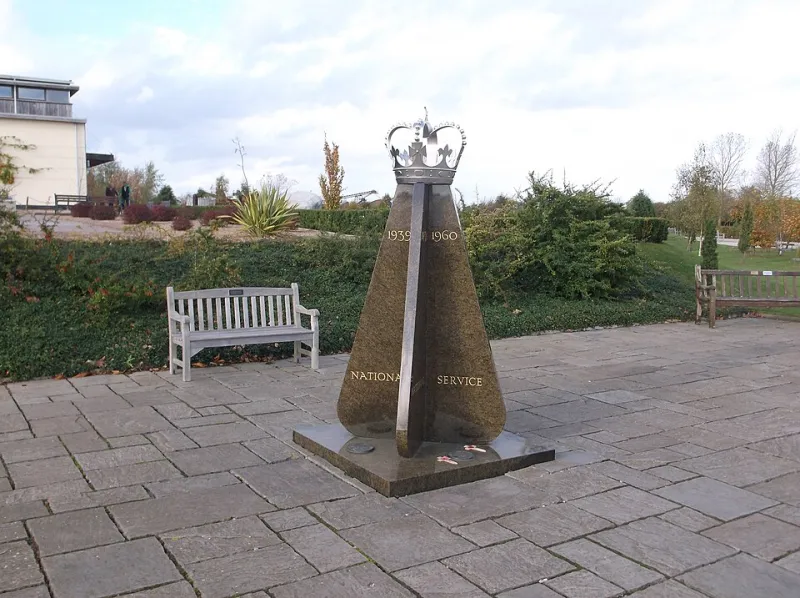
Photo: Harry Mitchell, CC BY 4.0, via Wikimedia Commons
On Remembrance Sunday, the Cenotaph in Whitehall becomes the centre of national attention. Wreaths are laid, names are read, and the language of sacrifice is carefully calibrated. The ritual is one of the most durable in British public life. Yet the ceremonies also reveal an awkward boundary. Britain remembers its war dead with extraordinary care; it remembers its peacekeepers far less systematically. In November 2026, that asymmetry deserves scrutiny.
The point is not that peacekeepers are forgotten in any simple sense. Their names appear on regimental memorials, local plaques, police memorials and the Armed Forces Memorial at the National Memorial Arboretum. Veterans' organisations keep their histories alive. But Britain has no dedicated national memorial whose primary purpose is to honour those who served, and died, on peacekeeping missions. Nor has peacekeeping acquired the public narrative that surrounds combat. The result is a memory gap: not silence, but a quiet dispersal of meaning.
A service without a clear script
Peacekeeping sits awkwardly in the British military imagination. It is not war-fighting, though it can become war by another name. Its guiding principles are consent, impartiality and the minimum use of force. Its successes are measured in violence avoided rather than territory taken. British personnel have served under United Nations mandates in Cyprus, the Balkans, the Middle East and Africa; police officers have monitored and trained; civilians have worked in mediation, elections and reconstruction. Each of these roles is distinct, yet they share a common feature: they rarely produce the kind of decisive event that public memory finds easy to hold.
War memorials have a grammar. There is the fallen, the enemy, the cause, the victory or the defeat. Peacekeeping has a different grammar: the patrol, the negotiation, the civilian protected, the escalation prevented. It is not that one form of service is nobler than the other. It is that one has been given a public language and the other has not. The absence of a dedicated memorial is both a symptom of that imbalance and a cause of it.
The architecture of remembrance
Britain's memorial landscape is plural and local. The Cenotaph, the Armed Forces Memorial, regimental chapels, village crosses and charity-funded gardens all carry different claims about who belongs to the national story. A peacekeeping memorial would not need to rival these. It would need to clarify. Location would matter: Whitehall would assert national centrality; the National Memorial Arboretum would place peacekeeping within a wider landscape of service; a civic site would root it in particular communities. Funding would matter too, whether public, charitable or mixed. Design would carry its own argument: a wall of names, a garden, an educational space, or a simple stone.
Police officers complicate the category further. UK police have served on international missions, and civilian experts have worked alongside military personnel in fragile states. A military-only memorial would misrepresent peacekeeping as a soldiers' story. A genuinely national memorial would need to acknowledge the constables, nurses, engineers, electoral advisers and mediators who have worn the national name in unglamorous places.
Why memory has policy consequences
Memorials are not only backward-looking. They shape recruitment, public consent and the armed forces covenant. If peacekeeping is treated as a footnote to war, it becomes easier to treat it as optional. In an era of defence reviews, fiscal pressure and contested multilateralism, the symbolic marginality of peacekeeping may reinforce its operational marginality. That is a political choice, even when it is made by omission.
Britain's security debate in 2026 is dominated by threats: state competition, cyber-attack, undersea infrastructure, terrorism. Peacekeeping can sound like a relic of a more optimistic decade. But United Nations and allied missions remain part of the international order Britain says it wants. They are also a form of influence that does not depend on large-scale combat. A memorial would not settle whether Britain should do more peacekeeping. It would, however, make the question visible.
The honesty problem
Any serious memorial must resist hagiography. Peacekeeping has failures, controversies and moral compromises. Missions can fail to protect civilians; peacekeepers can be complicit in abuse; mandates can be inadequate. A memorial that presented peacekeeping as innocence would be sentimental and brittle. A better memorial would present it as a discipline: difficult, constrained, sometimes successful, sometimes not. That is also a more adult form of remembrance.
The Cenotaph itself began as a temporary structure before it became permanent. It is a reminder that memorials are made, not found. They are political settlements about what a nation chooses to see. A peacekeeping memorial would not need to be grand. It would need to be honest enough to hold both the restraint and the risk, the protected civilian and the failed mandate, the blue helmet and the name on the local plaque.
What the silence says about Britain
British identity has long carried two stories at once. One is martial: Dunkirk, the Battle of Britain, the Falklands. The other is peaceable: arbitration, the rule of law, the United Nations, the Commonwealth. Pax Britannica was never only about power; it was also about the claim to order. In 2026, a peacekeeping memorial would test whether that second story is still believed enough to be marked in stone.
Critics might say Britain already has enough memorials. They might argue that remembrance should not be multiplied into a hierarchy of grief. That is a fair caution. But a dedicated peacekeeping memorial need not compete with the war dead. It could complete the picture, acknowledging that service in the national name has taken different forms. It could also acknowledge that peacekeeping is often a form of restraint, and restraint is hard to commemorate because it produces no monuments of its own.
The names waiting to be read
On Remembrance Sunday, the names read at the Cenotaph are largely military. They are not the only names. The peacekeepers' names are in regimental histories, in police records, in family papers, in the archives of missions that few Britons could locate on a map. They are not absent. They are unlisted in the national story.
A dedicated memorial would not make peacekeeping popular. It would not end controversy or settle budget questions. But it would give the public a place to ask what Britain asks of those who serve in the name of peace, and what Britain owes them when they do not come home. In a country that remembers war so well, that is not a sentimental question. It is a constitutional one.