Island Governors and the Work of Peace: Britain’s Overseas Territories in the Diplomatic Margins
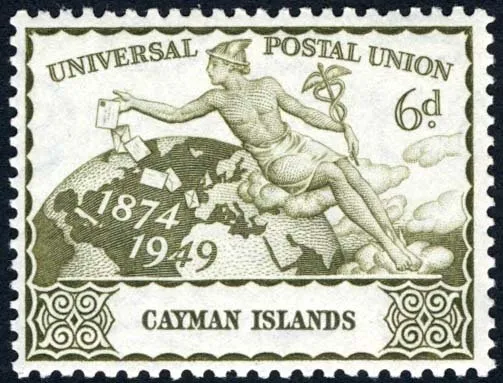
Photo: UK government for the Cayman Islands Post Office, Public domain, via Wikimedia Commons
On Grand Turk, Montserrat or Stanley, the governor’s residence is a small constitutional island within an island. The governor represents the Crown, appoints ministers in some territories, retains responsibility for external affairs, defence and internal security, and in others presides over a largely ceremonial office. The role is often treated as a relic. In practice, it is one of Britain’s more unusual instruments of peacecraft.
A Crown appointment with practical duties
Governors are appointed by the monarch on the advice of the UK government. Their powers vary. In territories with responsible government, the governor acts on ministerial advice except in reserved areas. In others, the governor has greater executive authority. The office is a bridge between local democracy and UK sovereignty. It is also a crisis manager.
That dual role is easily misunderstood. The governor is not a colonial proconsul in the old sense, but neither is the office purely symbolic. In a small jurisdiction, the governor may be the only official with the standing to convene the police commissioner, the premier, the finance minister and a visiting UK military commander in the same room. That convening power is a form of quiet diplomacy.
Disasters and borders
Caribbean territories face hurricanes, volcanic risk and coastal erosion. The governor convenes emergency committees, coordinates with local agencies, requests UK military assets and liaises with regional partners. In the aftermath of a storm, the governor’s office can become the hinge between local government, the UK aid system and international responders. That is peacecraft in its most practical form: preventing a natural disaster from becoming a political crisis.
In the Falklands and Gibraltar, the governor supports sovereignty and security in territories where borders and waters are contested. In territories near disputed maritime spaces, the governor’s office is a point of contact for incidents that could escalate. The governor does not conduct foreign policy alone, but the office can provide continuity when ministers change and attention wanders.
Local disputes also fall within the governor’s orbit. Constitutional standoffs, policing crises, prison disturbances and corruption investigations can all require the governor’s reserve powers or good offices. Using those powers is politically costly. A governor who intervenes too readily can undermine elected government. A governor who intervenes too late can allow a crisis to fester. The skill lies in knowing the difference between a problem local institutions can solve and one they cannot.
The limits of influence without statehood
Small places lack capacity. Governors can convene but cannot compel. They depend on UK departments for money, expertise and political cover. They lack the legitimacy of elected governments. The colonial legacy is real, and it shapes how local populations view the office. In 2026, constitutional reviews and sovereignty disputes make the role contested in several territories.
The model is not easily exported. It depends on a constitutional relationship that is peculiar to Britain’s Overseas Territories. It also depends on individuals. A skilled governor can make the office greater than its formal powers. A poor one can make it look like an anachronism.
What Whitehall can learn
Peacecraft is often local. The governor’s office practices quiet mediation, disaster diplomacy and inter-agency coordination in conditions of scarcity. It is not a substitute for statehood, but it shows how small jurisdictions can be laboratories for conflict prevention. Britain should invest in training for governors and their staff, clarify responsibilities between the governor’s office, local government and UK departments, and avoid treating the role as a ceremonial afterthought.
The governor’s peace is modest and contingent. It is the peace of a small administration that knows its limits and works through relationships rather than force. In the diplomatic margins, that may be the most honest kind of British influence available.