The Border You Do Not See: Britain, Ireland and the Common Travel Area’s Unwritten Peace
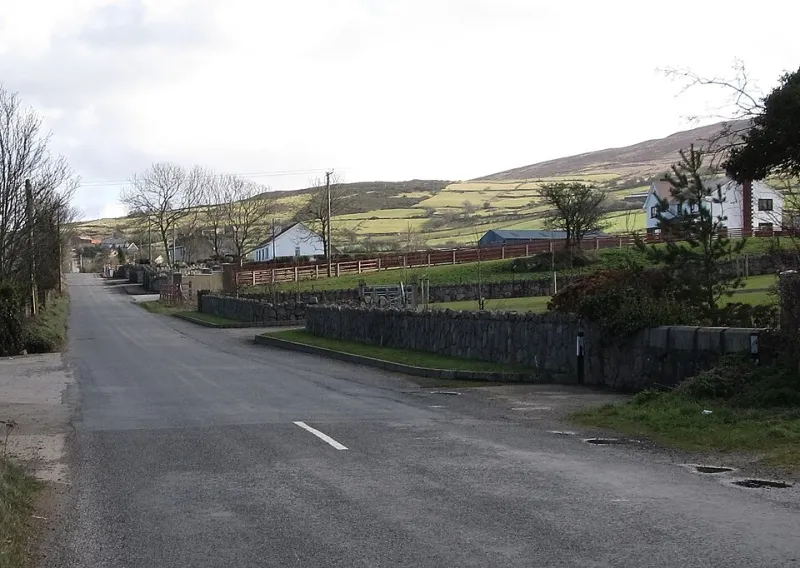
Photo: Eric Jones , CC BY-SA 2.0, via Wikimedia Commons
The Common Travel Area is the least ceremonial peace settlement in these islands. There is no signing ceremony to commemorate, no marble plaque, no annual summit staged around its survival. It consists instead of reciprocal permissions, administrative understandings and the ordinary expectation that a British citizen may travel to Ireland, and an Irish citizen to Britain, without the machinery of passport control standing in the way. Precisely because it is so mundane, it is easily overlooked. Yet for a century it has formed part of the quiet architecture that keeps Anglo-Irish relations from reverting to their harder edges.
An arrangement without a monument
The Common Travel Area predates the European project and has outlasted many of its assumptions. Its origins lie in the settlement of the early 1920s, when the Irish Free State emerged and both governments found it practical to preserve long-standing patterns of movement across the Irish Sea. It was not created by a single statute or treaty. Instead, it grew through domestic law, immigration practice and mutual recognition: each state treating the other’s citizens with a familiarity that stopped short of formal union.
That ambiguity is part of its strength. The CTA is not a customs union, nor a single immigration system, nor a Schengen-style arrangement. It is a patchwork of rights and understandings, sustained by the willingness of two administrations to make it work. In the United Kingdom, Irish citizens enjoy a privileged position that is unusual for nationals outside the Commonwealth; in Ireland, British citizens have long been treated with comparable ease. The arrangement survives because it is useful, not because it is legally elegant.
What Brexit did not break
When the United Kingdom voted to leave the European Union in 2016, the Common Travel Area became one of the first things both governments pledged to protect. That pledge was easier to make than to deliver. Brexit altered the wider legal context in which the CTA operates, separating the UK from EU free movement while leaving Ireland inside it. Yet the CTA itself was never dependent on EU membership. It rested on bilateral reciprocity, and both Dublin and London recognised that dismantling it would impose costs on citizens and symbolism on a relationship that could bear neither.
As of 2026, the arrangement remains in place, but it is not untouched. The border between Ireland and Northern Ireland has become a subject of intense administrative attention, and the movement of people, goods and data across these islands is governed by a more complicated set of rules than existed a decade ago. The CTA has survived because it was treated as distinct from EU membership, but its survival has required constant maintenance: immigration rules, social security coordination, healthcare entitlements and the practical recognition of professional qualifications all depend on continuing cooperation.
The sovereignty in the small print
The CTA’s informality can obscure a difficult truth: borders are not only lines on a map but systems of control. The absence of routine passport checks does not mean the absence of immigration control. Both states retain the right to refuse entry, to remove people who do not meet the terms of the arrangement, and to police their own labour markets. The CTA works because it combines openness with a shared confidence that each side will manage its own territory responsibly.
That confidence is not self-executing. It depends on intelligence-sharing, carrier liaison, data exchange and the unglamorous work of officials who do not feature in peace agreements. It also depends on political restraint. If one government changes its immigration rules abruptly, or if public opinion in either state turns against the arrangement, the CTA can erode without any formal breach. Its lack of a treaty text is a source of flexibility, but it also means that accountability is diffuse. Parliamentarians in London and members of the Oireachtas in Dublin have limited opportunities to scrutinise a relationship that is conducted largely through administrative practice.
A model for practical peace
The CTA is not a template that can be exported wholesale. It is rooted in geography, shared history and a century of habit. But it does offer a wider lesson for British foreign policy: peace is often sustained less by grand declarations than by the patient construction of reciprocal rights. The arrangement works because it gives citizens something concrete — the ability to work, study, visit family and receive healthcare — rather than because it asks them to believe in a political ideal.
That has implications for how Britain thinks about its neighbourhood. The CTA is a strategic asset, not a background fact. It supports the peace process in Northern Ireland by normalising movement across these islands, but it cannot substitute for the political institutions that make devolution work. It eases Anglo-Irish relations, but it does not resolve disputes over asylum, trade or legacy. Its value lies in the ordinary: in the student who crosses the Irish Sea without paperwork, the family that gathers without visas, the worker who takes a job in another jurisdiction without a residence permit.
The peace that is not announced
In 2026, the Common Travel Area is likely to remain what it has long been: uncelebrated, lightly legislated and quietly indispensable. That is both its achievement and its vulnerability. A peace settlement that depends on administrative discretion can be undone by administrative drift. If Britain wishes to preserve the arrangement, it should treat it as a matter of deliberate statecraft — not merely as a convenience for travellers, but as part of the architecture that keeps relations between these islands civil.
The CTA will never command a parade. It does not need one. But it deserves more attention than it receives, because it demonstrates a form of power that Britain has often undervalued: the power to make peace through practical arrangements rather than proclamation. In the unglamorous machinery of movement and mutual recognition, there is a lesson worth preserving.