Helmets in the Balance: Britain’s Peacekeeping Role in a Contested Age
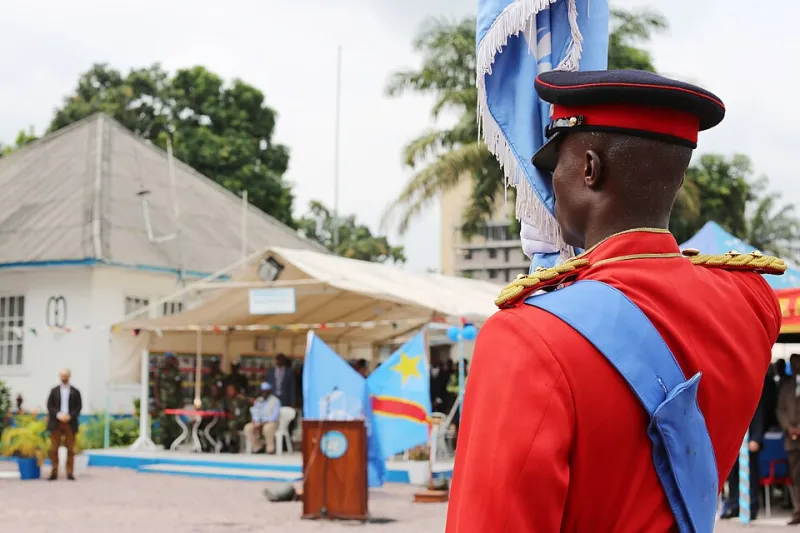
Photo: MONUSCO Photos, CC BY-SA 2.0, via Wikimedia Commons
The blue helmet is one of the most recognisable symbols in international affairs. It is also one of the most awkward for a British government. The United Kingdom is a permanent member of the UN Security Council, a major financial contributor to UN peacekeeping and a country that routinely invokes a rules-based international order. Yet in 2026 its contribution of uniformed personnel to UN missions remains small. The gap between Britain’s rhetorical commitment to peace and its practical contribution to peacekeeping is not new, but it is becoming harder to ignore.
The test behind the emblem
Peacekeeping is often discussed as if it were a single activity. In practice it covers a wide range of missions, from monitoring ceasefires and protecting civilians to supporting political transitions and rebuilding police services. The UK has historically been wary of large-scale UN troop deployments, preferring NATO operations, bilateral training missions and ad hoc coalitions. That preference has deepened as defence planning has focused on high-intensity warfighting, nuclear deterrence and the Indo-Pacific tilt.
The result is a paradox. Britain remains an important payer into UN peacekeeping budgets and a significant voice in Security Council mandates. It offers niche capabilities—engineering, medical support, signals, staff officers and police expertise—that UN missions value. But it is not a leading troop contributor. On the blue helmet test, Britain scores well on diplomacy and funding, less well on manpower and political risk-taking.
NATO first, peacekeeping second
The primary explanation is strategic. British defence policy is organised around NATO, and the war in Ukraine has reinforced that priority. Ministers speak of a more dangerous world, of resilience and of the need to rebuild stockpiles and industrial capacity. The 2026 defence debate is dominated by spending levels, recruitment shortfalls and the affordability of existing equipment programmes. Peacekeeping sits far down that list.
This is not simply a matter of money. Peacekeeping demands a different kind of military posture: sustained deployments, force generation across allies, and a willingness to accept casualties in conflicts where British national interest is not always obvious. Public support for such missions is conditional. Parliament is sensitive to legal risk. The Ministry of Defence is cautious about overstretch. A government that has promised to be a force for good abroad must also explain why British soldiers should stand between armed groups in distant provinces when the Chief of the Defence Staff is warning about readiness closer to home.
There is also a credibility issue. UN peacekeeping has struggled in recent years with constrained mandates, hostile environments and questions about the conduct of some troop-contributing countries. Britain can help to raise standards, but it cannot do so convincingly if its own contribution is tokenistic. The blue helmet is a moral emblem only when it is backed by practical commitment.
The political will problem
In Whitehall, peacekeeping is often treated as a niche interest rather than a central instrument of statecraft. The Foreign, Commonwealth and Development Office values it for conflict prevention and multilateral legitimacy. The military values it for training and interoperability, but worries about diversion from NATO tasks. Ministers value it when it provides visibility and international credit, and avoid it when it risks controversy.
That is a recipe for drift. Britain’s claim to be a peacekeeping power rests less on battalions than on influence: the ability to shape mandates, fund programmes, train partners and provide specialised enablers. Those are real contributions. But they are also fragile. They depend on sustained political attention, and they can be cut quietly when budgets tighten or when a crisis elsewhere demands resources.
The more contested global environment makes the choice starker. Conflicts in Sudan, the Sahel, the Democratic Republic of the Congo and beyond have exposed the limits of peacekeeping. Major powers are less willing to compromise in the Security Council. Troop-contributing countries from the Global South are more assertive about the terms of their participation. In that context, a P5 member that contributes little to uniformed peacekeeping risks being seen as a shareholder rather than a stakeholder.
A different kind of peacekeeping power
None of this means Britain has ceased to be a peacekeeping power. It means the term must be defined honestly. Britain is not a mass troop contributor and is unlikely to become one. It can still be a peacekeeping power in the sense that matters to the UN: a reliable financier, a skilled trainer, a diplomatic broker and a provider of niche capabilities that make missions more effective. It can use its Security Council seat to defend realistic mandates and to insist on accountability. It can work through partnerships rather than pretending to be a unilateral peacekeeper.
But the political will must match the language. If British ministers continue to describe the UK as a force for good, they should be prepared to answer a simple question: where are the blue helmets? The answer need not be a battalion in every mission. It should, however, be a coherent strategy that treats peacekeeping as part of Britain’s defence and diplomatic repertoire rather than as a remnant of a previous era.
In 2026, the blue helmet test is not only about military capacity. It is about whether Britain can still make the case for multilateral peacekeeping at home, sustain the capabilities that make it useful abroad, and resist the temptation to retreat into nostalgia about a global role it no longer has. That is a harder test than any single deployment—and a more revealing one.