The Leasehold Peace: Chagos, Diego Garcia and Britain’s Strategic Conscience
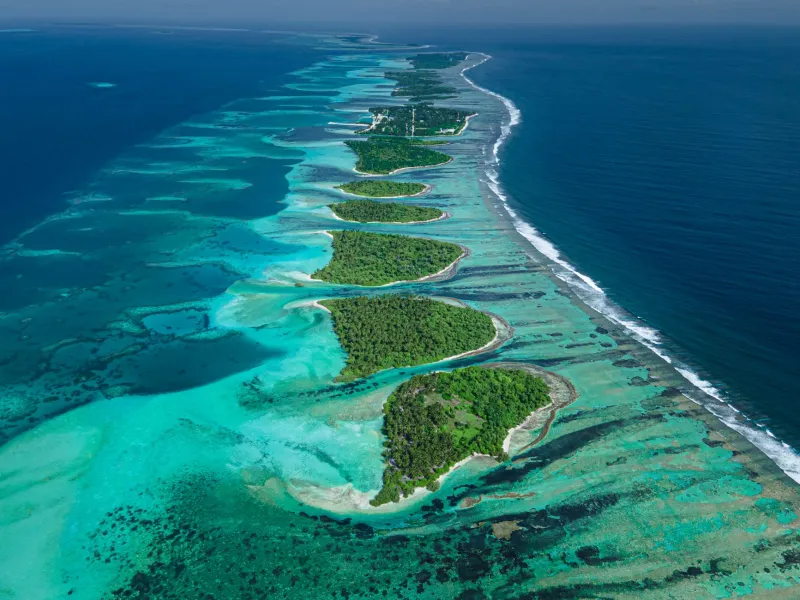
The Chagos archipelago is not a remote footnote to British foreign policy. It is a test of how Britain reconciles three claims that rarely sit comfortably together: the security of a strategic base, the sovereignty of an Indian Ocean partner, and the rights of a people removed from their homes. The settlement between London and Port Louis, which transfers sovereignty to Mauritius while leasing Diego Garcia for continuing military use, has been presented as a resolution. In practice it is a framework whose credibility will be judged over the years of its implementation, not at the moment of signature.
Sovereignty on a Ninety-Nine-Year Clock
The architecture is unusual but not mysterious. Sovereignty passes to Mauritius; the base remains under a long lease; the United Kingdom retains access to facilities that it regards as vital to its own defence and to the wider Western posture in the Indian Ocean. For ministers, this is a pragmatic compromise: it answers the decolonisation argument without surrendering the operational footprint. For Mauritius, it restores a measure of legal title while accepting that the atoll will remain a military installation for most of a century. For Chagossians, the settlement is more ambiguous. It creates a route to return, but not a guarantee; it acknowledges history, but does not erase the conditions that produced exile.
The leasehold model is therefore best understood as an attempt to separate sovereignty from control. That separation can be useful diplomatically. It allows Britain to say that it has corrected an anomaly while preserving a capability. But it also exposes a tension at the heart of the British case: if the base is justified by stability and international order, the terms of its continuation must be defensible to those who live with its consequences. A lease can buy time. It cannot by itself supply legitimacy.
The Base and the Balance Sheet
Diego Garcia's value is not in doubt. It is a logistics hub, a maritime surveillance point and a facility that has supported operations across the Gulf, the Indian Ocean and beyond. For the United States, it is a longstanding and hard-to-replace asset. For Britain, it is one of the few places where global ambitions meet physical infrastructure. The settlement preserves that arrangement while changing the legal weather around it.
Yet the strategic case cannot be reduced to a map. Bases are sustained by politics as well as concrete. If the host settlement is seen as fair, the facility is easier to defend in international forums and easier to explain at home. If it is seen as a colonial remnant dressed in legal form, every operational dependency becomes a diplomatic liability. The Chagos deal does not remove that risk. It manages it. The difference matters, because Britain's peacekeeping claims rest on the idea that it upholds a rules-based system rather than merely benefiting from one.
The Return That Remains Unfinished
The most sensitive test is return. Chagossians were removed from the archipelago in the late 1960s and early 1970s to make way for the base, and the injustice of that removal has outlasted successive legal and political arguments. The settlement includes provisions for resettlement and a trust fund, but money and legal permission are not the same as a viable community. Return depends on transport, housing, employment, environmental management and access to the islands that remain militarily active. It also depends on the Chagossians themselves being treated as decision-makers rather than beneficiaries of a scheme designed elsewhere.
This is where the gap between peace rhetoric and defence reality is most visible. A government can describe a settlement as historic while still controlling the pace and terms of return. It can promise consultation while retaining the power to decide what consultation means. The credibility of the Chagos settlement will therefore depend on details that rarely make headlines: the composition of resettlement bodies, the transparency of funding, the rights of those who choose not to return, and the willingness of London and Port Louis to accept scrutiny. Without those details, the deal risks becoming a memorial to an injustice rather than a remedy for it.
Credibility Abroad, Constraint at Home
For British foreign policy, the Chagos question is not isolated. It sits alongside other commitments that present Britain as a contributor to international peace and order. Peacekeeping, mediation and sanctions are presented as expressions of responsibility. A colonial footprint that remains contested makes that story harder to tell. It does not make it false. It does make it conditional.
Domestic politics adds a further constraint. Parliament has an interest in the treaty's costs, its military terms and its human consequences. The public has an interest in whether a distant base is worth the reputational price. Neither interest is served by treating the settlement as a technical matter to be ratified and forgotten. The more the government can explain the trade-offs, the more durable the compromise is likely to be. Secrecy may protect negotiating room, but it weakens the public legitimacy on which a long lease ultimately rests.
A Test Case, Not a Conclusion
The Chagos settlement should be judged as a test case rather than a conclusion. It asks whether Britain can hold a strategic asset without treating sovereignty as a formality, and whether it can honour a displaced people without pretending that return is simple. It also asks whether peacekeeping credibility can survive a defence policy that still carries the imprint of empire.
None of these questions has a clean answer. The leasehold peace may prove workable if it is implemented with candour, if Chagossian agency is real, and if the base's strategic value is matched by a serious account of its political costs. If it is not, the atoll will remain what it has long been: a small place that tells a large truth about Britain's place in the world.